
Bee Storage Guides
Putting Furniture Into Storage? Here’s How to Keep It Protected
Putting furniture into storage? Find out how to protect sofas, beds, tables and other furniture from scratches, moisture and damage while in self storage.
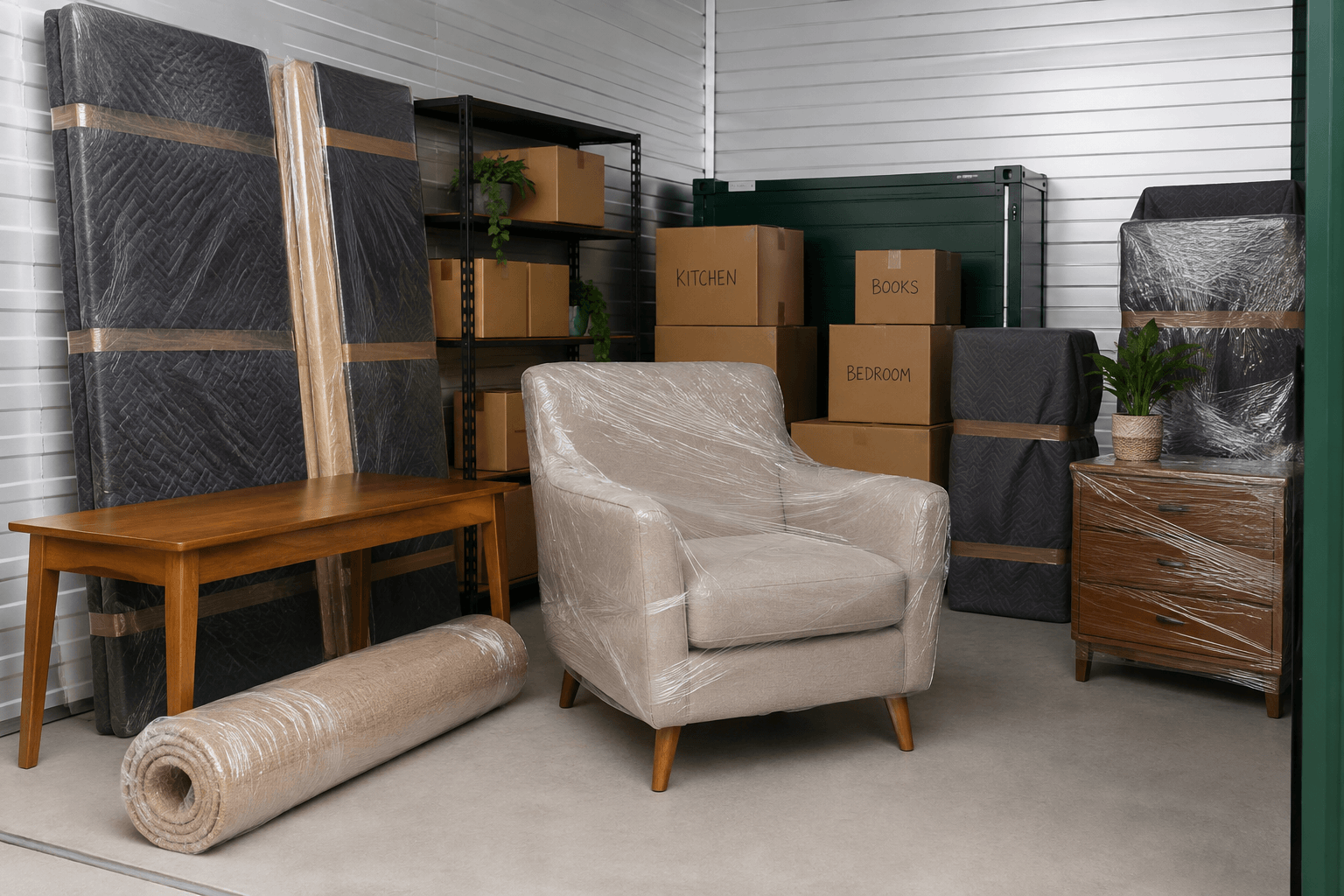
Whether you’re moving house, renovating, downsizing or simply trying to reclaim some space at home, putting furniture into storage can be much easier than trying to find temporary homes for sofas, tables, beds and wardrobes.
But there’s a difference between simply putting furniture into a storage unit and storing it properly.
A little preparation before it goes in can help protect your furniture from knocks, scratches, dust and moisture while it’s being stored.
How Do I Protect Furniture While It’s in Storage?
If you’re wondering how to protect furniture in storage, start with one simple rule: make sure everything you put away is clean and completely dry.
Moisture is something you don’t want to trap around furniture.
Government guidance explains that excess moisture can affect furniture and other belongings and can encourage mould growth.[1]
So don’t put away furniture that’s damp from cleaning or has been sitting outside while you’re loading. Give everything time to dry properly first.
Clean it before you store it
It might seem pointless cleaning a table or sofa you’re about to put away, but dirt, crumbs and existing marks aren’t going to improve while they’re sitting in storage.
Vacuum upholstered furniture, wipe down hard surfaces and make sure everything is properly dry before covering it.
It’s also a good opportunity to empty drawers and cupboards.
Not only does that make furniture lighter to move, it prevents you discovering six months later that you’ve accidentally stored a wardrobe with something forgotten inside it.
Take larger furniture apart where you can
A dining table takes up a lot less room when the legs are removed.
The same can apply to bed frames, desks and other furniture designed to be dismantled.
Taking larger items apart can make them easier to move and help you use your storage unit space more efficiently.
There’s one important trick: keep all the fixings together.
Put screws, bolts and fittings into a labelled bag and either attach it securely to the relevant piece of furniture or keep all your furniture fixings together in a clearly marked box.
Taking a bed apart is easy. Remembering which eight bolts belonged to it six months later can be the difficult bit.
Cover furniture — but don’t trap moisture around it
Covers can help protect furniture from dust, dirt and accidental scratches while you’re moving and storing it.
Moving blankets, furniture covers and other suitable protective materials can be particularly useful around wooden furniture and upholstered items.
But airflow matters too.
Official government guidance on damp and mould explains that condensation tends to develop in areas with little air movement, including behind furniture.[1]
Manchester City Council similarly advises leaving a small gap around furniture so air can circulate rather than positioning it tightly against surfaces.[2]
So rather than packing everything as tightly as physically possible, give your furniture a little breathing room where practical.
Consider using moisture absorbers
For a little extra protection, you could also use moisture absorbers or moisture traps inside your storage unit or container.
These are designed to help collect excess moisture in enclosed spaces and can be particularly useful when you’re storing furniture, fabrics, boxes or other belongings that could be affected by moisture.
They shouldn’t be relied on as your only protection. Furniture should still go into storage clean and completely dry, with suitable covers and some room for air to circulate where practical.
If you’re storing belongings for a longer period, it’s also worth checking moisture absorbers periodically and replacing them when needed.
Stacking & keeping furniture off the floor
When you’re trying to fit everything into storage, it’s tempting to start stacking.
Think carefully about what’s supporting the weight.
A sturdy chest or properly packed box may cope with weight above it. Your sofa probably shouldn’t be holding six heavy boxes.
Keep heavier, sturdier items lower down and lighter items higher up.
Avoid putting unnecessary pressure on upholstered furniture, mattresses or anything that could lose its shape.
If you’re stacking boxes, make sure they’re properly packed and stable rather than creating a tower that could topple onto your furniture.
Don’t forget the floor
Where practical, consider keeping furniture and belongings slightly raised rather than placing everything directly on the floor.
Pallets, suitable shelving or another stable raised surface can help create separation and make organising your storage easier.
Just make sure whatever you’re using is stable and suitable for the weight being placed on it.
Leave yourself a way back in
This is one people often forget.
You pack everything perfectly, close the door, then three weeks later realise the box you need is somewhere behind a wardrobe, two mattresses and half the contents of the kitchen.
If you’ll need access while your furniture is stored, leave yourself a small pathway.
Put things you’re unlikely to need towards the back and keep frequently accessed belongings closer to the front.
It might mean using slightly more space, but it can save you from unloading half the unit later.
Not sure how much room everything will take? Read our What Size Storage Unit Do I Need? guide before choosing your storage.
Good furniture storage starts before you close the door
Protecting furniture in storage doesn’t need to be complicated.
Clean it. Dry it. Dismantle what you can. Protect vulnerable surfaces. Consider moisture absorbers. Allow some airflow. Stack sensibly.
Taking a little extra time when you move everything in can make a big difference when it’s time to take it back out.
Whether your furniture is going away for a few weeks during a house move or for longer while you renovate or downsize, the aim is the same:
You want it coming back out in the same condition it went in.
Need somewhere to store your furniture?
Bee Storage provides personal and home self storage in Stockport for moving house, renovating, downsizing, decluttering or simply needing some extra room.
Not sure how much storage space your furniture will need?
View our Personal & Home Storage options, take a look through our Storage FAQs, or contact the Bee Storage team and we’ll help you work out what suits what you’re storing.
Sources & further reading
[1] GOV.UK — Understanding and Addressing the Health Risks of Damp and Mould
→ GOV.UK source
[2] Manchester City Council — Keep Free From Damp and Mould
→ Manchester City Council source