
Bee Storage Guides
How to Pack a Storage Container: Make the Most of Your Space
Learn how to pack a storage container efficiently, organise your belongings and make the most of your space while keeping everything accessible.
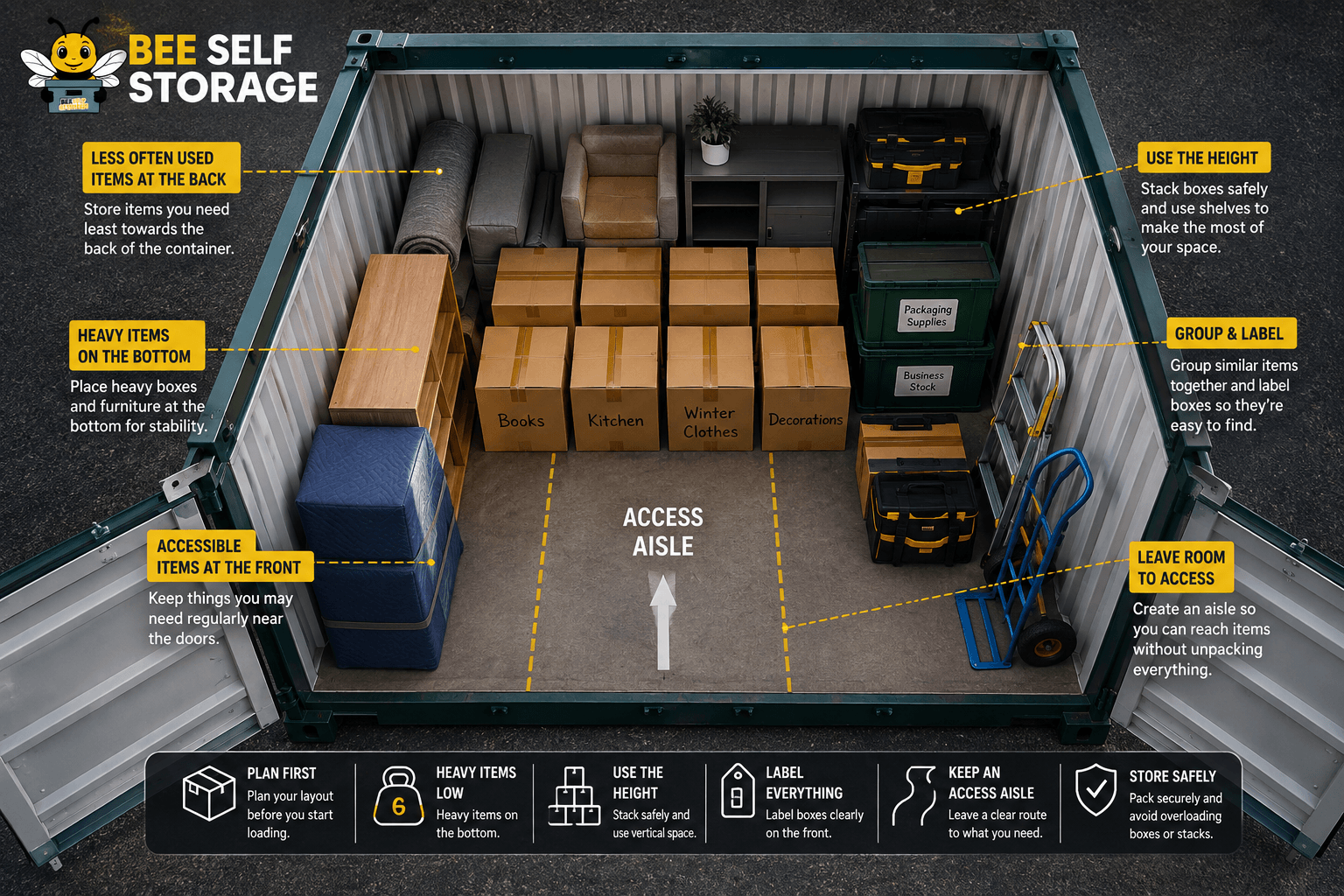
Knowing how to pack a storage container properly can help you make better use of the available space and keep the things you need accessible.
Getting everything into your storage container is one thing. Packing it so you can make good use of the space and still find what you need later takes a little more planning.
Whether you’re storing furniture and household belongings or business stock, tools and equipment, the order you load everything can make a big difference.
A well-organised container can help you use the available space efficiently, protect your belongings and avoid having to move half the contents just to reach one box at the back.
What Is the Best Way to Pack a Storage Container?
The best place to start is before you load the first box.
Think about what you’re storing, which items are the heaviest, what can safely be stacked and — importantly — what you may need to access again.
If you’re storing household belongings during a move, you might not need anything until the container is eventually emptied.
A business storing stock or tools could be very different. You may need to visit regularly and get to particular boxes or equipment without unloading everything else.
So rather than simply filling every available gap, plan the container around how you’re actually going to use it.
Plan where everything will go before you start
Before loading the container, take a few minutes to think about what needs to go at the back and what needs to stay within easy reach.
Items you probably won’t need until the container is emptied can usually go further back. Things you’ll want regularly should stay closer to the doors.
For personal storage, that might mean keeping seasonal clothes, important boxes or belongings you’ll need during a house move near the front.
For business storage, regularly used tools, fast-moving stock or packaging supplies may need to remain accessible.
It can also help to group similar things together. Creating simple areas for furniture, boxes, tools or business stock makes it much easier to remember where everything is later.
The aim isn’t just to fit everything in — it’s to create a storage space that still works once it’s full.
Put heaStart with your heavier and more substantial items, particularly anything that can provide a stable base for lighter belongings.
Keep heavy boxes low rather than stacking them above lighter or fragile items, and avoid creating tall, unstable piles simply to use every last bit of height.
Furniture and larger equipment can often be positioned first, with smaller boxes and belongings organised around them.
If furniture can be safely dismantled, doing so may also help you use the available space more efficiently. Keep screws, fittings and other small parts together and clearly labelled so they’re easy to find when you need them again.
If you’re storing furniture, our How to Protect Furniture in Storage guide has more detailed advice on preparing and protecting individual pieces.vy and bulky items in first
Make use of the height — safely
One of the easiest ways to make better use of a storage container is to remember that you’re not limited to the floor space.
Strong, well-packed boxes can be stacked to make use of the available height, with heavier boxes at the bottom and lighter ones above.
You can also make use of otherwise empty spaces. Smaller boxes or suitable belongings may fit inside wardrobes, cupboards or other furniture, provided nothing is overloaded or likely to be damaged.
But don’t try to use every last inch if it means creating unstable stacks. Everything should remain secure enough that boxes aren’t likely to topple when you open the container or remove something nearby.
Leave a route to the things you’ll need
If you’re putting everything into storage and won’t need it again until you move out, you may be able to pack the container relatively tightly.
But if you’ll be visiting regularly, leave yourself enough room to reach the things you need.
For a business, that could mean keeping tools, equipment or frequently used stock close to the doors and leaving a simple access route through the container.
For personal storage, it might mean keeping documents, seasonal belongings or boxes you’ll need during a house move somewhere accessible.
Giving up a small amount of packing space can be worthwhile if it means you don’t have to unload half the container every time you need something.
Label your boxes so you can actually find things
A container full of identical cardboard boxes becomes surprisingly difficult to navigate if none of them are labelled.
Keep labels simple and make sure they’re visible from the direction you’ll access the boxes.
For personal storage, labels such as Kitchen, Bedroom, Books, Winter Clothes or Fragile may be enough.
For business storage, you might organise boxes by product type, stock category, tools, equipment or packaging supplies.
If you’re storing a lot, a simple inventory on your phone can help. You could even take a photograph of the finished container so you’ve got a quick reminder of where different groups of items are located.
Protect items as you pack
Using the space efficiently shouldn’t come at the expense of protecting what’s inside.
Make sure belongings are clean and completely dry before storage, use suitable boxes and protective materials, and don’t place heavy items on anything that could be crushed or damaged.
Fragile belongings need suitable padding, while furniture may benefit from moving blankets or appropriate covers to help protect it from knocks, scratches and dust.
We’ve covered preparation in more detail in our How to Protect Your Belongings & Business Items in Self Storage guide
Don’t forget the space near the doors
The area closest to the container doors is valuable because it’s the easiest part to reach.
Think about what you’re most likely to need first when deciding what goes there.
For someone moving house, that could be essential boxes or belongings needed before everything else is unpacked.
For a business, it could be regularly used tools, fast-moving stock or packaging.
Try not to block access with one large item unless you’re confident you won’t need anything behind it.
Don’t sacrifice safety just to fit in one more box
Making good use of your container doesn’t mean squeezing something into every possible gap.
Avoid overloaded boxes, unstable stacks and arrangements that could make belongings difficult or unsafe to retrieve.
If everything only fits by creating piles you can’t safely reach or leaving no way to access the things you need, you may simply need more storage space.
Our What Size Storage Unit Do I Need? guide can help if you’re unsure whether the space you’re considering will be large enough.
Make your container work for you
Someone storing the contents of a home for several months will use their space differently from a tradesperson collecting tools every morning or a business regularly accessing stock.
The important things are to plan before you load, keep heavy items low, use the height sensibly, label your boxes and keep frequently needed belongings accessible.
Bee Storage offers 10ft and 20ft drive-up storage containers in Stockport, suitable for a wide range of personal, home and business storage needs.
Explore our Container Storage options, read our Storage FAQs, or contact the Bee Storage team if you’re unsure how much space you’ll need.
Sources & further reading
[1] Health and Safety Executive — Manual Handling at Work
Official HSE guidance covering safer lifting, carrying and handling of loads.
[2] Health and Safety Executive — Warehousing and Storage: A Guide to Health and Safety
Official guidance covering safe storage, stacking, stability and handling within storage environments.